Nova Scotia is expected to have some fixed-wing water bombers in the province over the wildfire season to add to its current fleet.
Scott Tingley, manager of forest protection with the Department of Natural Resources (DNR), told The Todd Veinotte Show that the planes are coming to the province soon.
“We’ve always had access to them through our mutual aid agreements, but having them positioned in the province is certainly an enhancement to our current complement,” he said.
The planes are expected to be on a contract from May 1 through the end of September, with the province hiring three positions to support the temporary contract. Nova Scotia does not have its own fleet of water bombers, which means it relies on other provinces, like New Brunswick and Quebec.
Last year, there were a lot of questions to the government about its lack of fixed-wing water bombers as a wildfire threatened Halifax Regional Municipality, in Bayer’s Lake.
Tingley said the planes will be on top of the current fleet of helicopters that were integral to fighting wildfires across the province last summer. In 2025, the province battled one of the worst seasons on record, which saw blazes drain resources and stay hot well into the latter part of the season. Some homes and structures were lost, and people spent weeks evacuated while crews tackled high flames.
Conversations around the wildfires were fuelled by memories of the fast-moving Tantallon blaze that was utterly devastating for the community and the province in 2023.
Wildfire season in Nova Scotia is underway, meaning people need to look at the province’s burn map before lighting anything now until Oct. 15. No domestic bush burning or campfires are allowed between the hours of 8 a.m. and 2 p.m.
The government’s website will update conditions daily and inform residents when further restrictions are put in place.


4 items
Parts of Nova Scotia are drier than normal
Officials are closely monitoring this year’s forecast and preparing for rapidly changing conditions, Tingley said.
“The snow that we had was certainly helpful; the longer it sticks around, it mitigates the risk,” he said. “But it disappeared pretty quick here with the rain in some of the milder weather.”
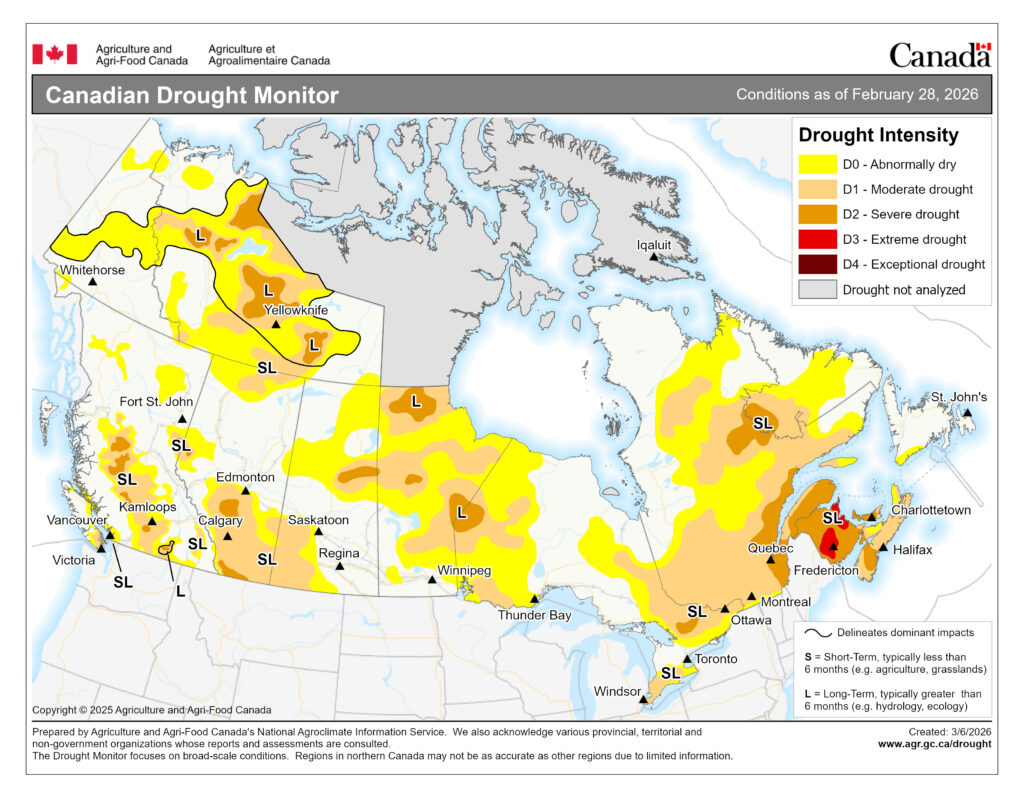
According to the current drought conditions from Environment Canada, some portions of Nova Scotia reported less than 40 to 60 per cent of normal precipitation in February. In the southwest, drought conditions worsened, the report notes.
Tingley said weather experts are looking at grass and “finer fuels” in spring since they often dry out the fastest.
“Those are more influenced this time of year,” he said. “What we saw last year in August was extended kind of periods of drought where we’ve gone for days or many weeks without rain.”